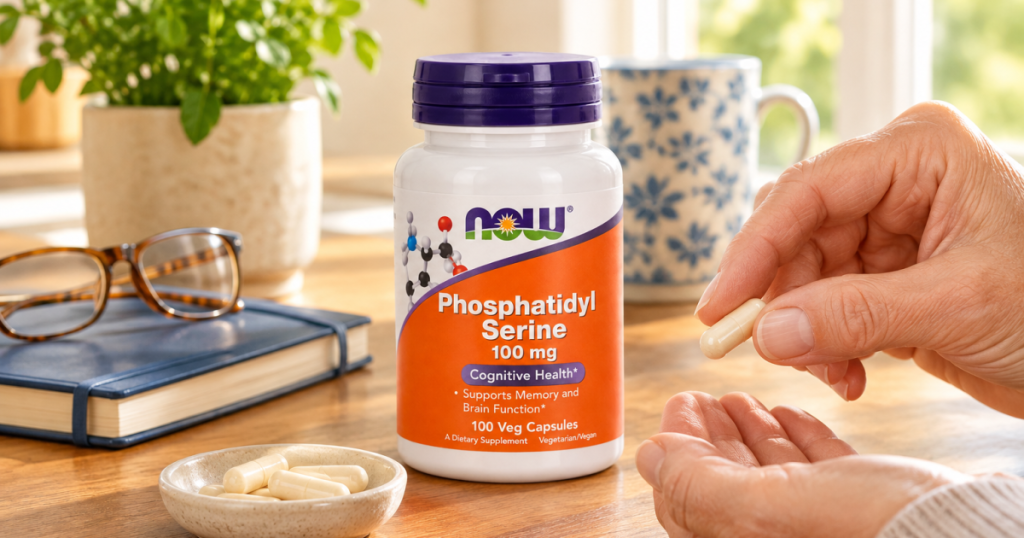
NOW Phosphatidyl Serine 100 mg is a phosphatidylserine supplement in capsule form, positioned for memory and learning support rather than as a broad, all-in-one brain blend. This NOW Phosphatidyl Serine 100 mg review looks at the day-to-day question that matters most: whether a focused phospholipid capsule is easier to fit into a sensible routine than a busier formula with more moving parts.
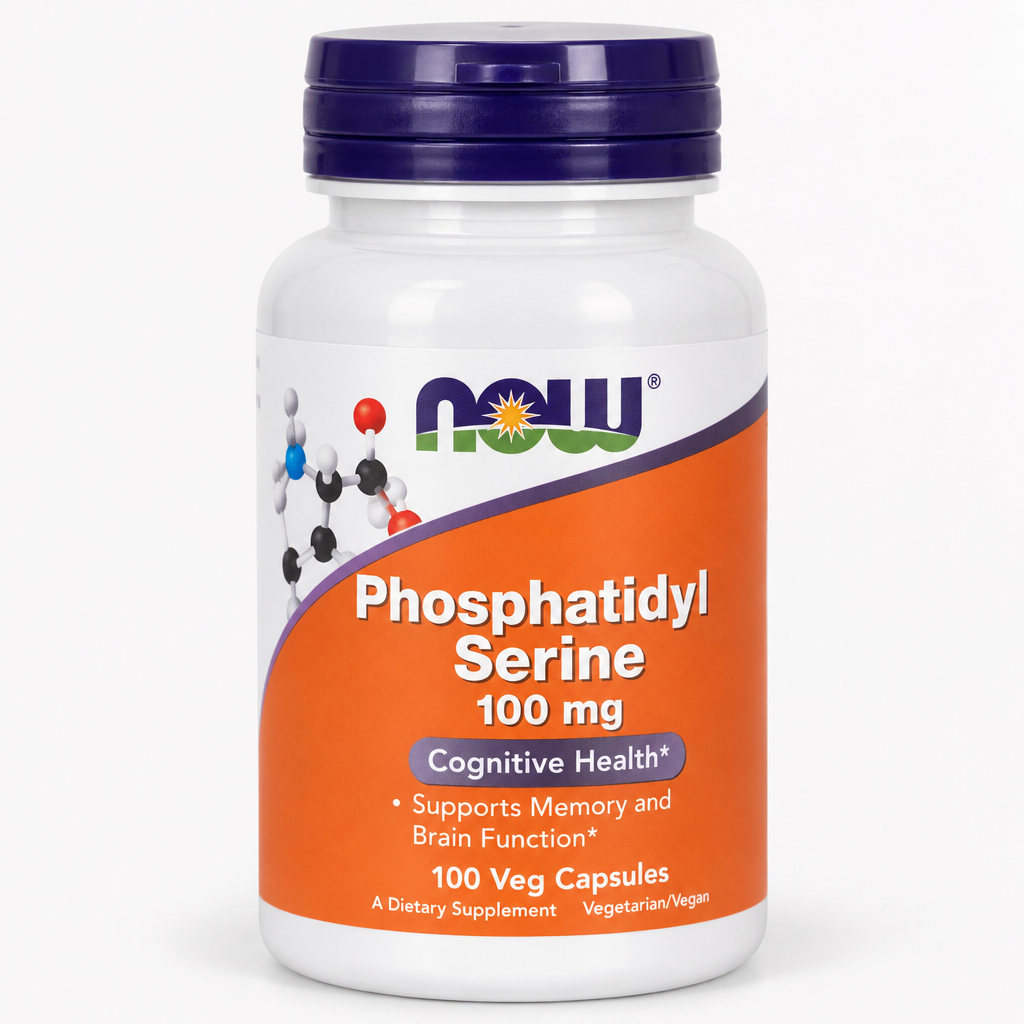
NOW Phosphatidyl Serine 100 mg
A focused, stimulant-free phosphatidylserine option for adults building a simpler memory-support routine
Quick verdict: this is a cleanly defined, stimulant-free option for adults who want a targeted phosphatidylserine-style product. The main compromise is routine friction, because the label allows a range of one to three capsules daily, preferably with food.
Supplement use alongside prescription medications, medical conditions, pregnancy, or nursing should be reviewed by a qualified healthcare professional so decisions align with your care plan and applicable healthcare standards.
Pros & Cons
Pros
- Focused phosphatidylserine or phospholipid formula is easier to place in a lean supplement routine.
- Stimulant-free positioning suits readers avoiding alertness-driven focus products.
- Capsule format keeps the product familiar and straightforward to organize.
- Listed stack role is clearly centered on memory and learning support rather than a sprawling blend.
Cons
- One to three capsules daily can add routine friction for people already managing several supplements.
- Preferably taken with food, so it works best when tied to regular meals.
- Focused scope means it is not an all-in-one broad brain formula.
Product Details
- Product name: Phosphatidyl Serine 100 mg Veg Capsules.
- Brand: NOW.
- Product type: phosphatidylserine supplement.
- Key ingredient families: phosphatidylserine or phospholipids; choline donor.
- Formula scope: focused combination.
- Likely stack role: memory and learning support; foundational nutrient support.
- Format: capsule.
- Daily unit count: one to three capsules daily.
- Routine note: one capsule up to three times daily, preferably with food.
- Servings per container: 60 servings for the 60-count size; a 120-count size is also listed.
- Stimulant status: stimulant-free.
- Label caution: for adults only; consult a physician if pregnant, nursing, taking medication, or have a medical condition.
The 100 mg-per-capsule format makes this product relatively easy to scale without guessing. Someone who wants the most conservative starting point can keep the routine simple, while someone following the upper end of the label directions can do so in measured steps. That kind of per-capsule clarity is helpful with phosphatidylserine because expectations should be steady and long-range, not based on an immediate “kick” after a single dose.
The capsule format also keeps the sensory side simple. There is no powder to mix, no flavor system to tolerate, and no sweeteners added for taste. For people who dislike drink mixes or gummies, that is a practical advantage. The trade-off is that capsules depend on consistency and storage habits: keeping the bottle visible but away from heat, moisture, and direct light can make the routine easier to maintain without compromising basic supplement care.
From a label-reading perspective, this is best viewed as a targeted phospholipid entry rather than a full cognitive nutrition plan. It does not cover every nutrient category someone might associate with brain health, and that restraint is part of the product’s identity. If your diet, sleep, movement, hydration, and medication schedule are already being addressed
A focused phospholipid product, not a crowded brain blend
The clearest strength here is the narrow lane. NOW Phosphatidyl Serine 100 mg is built around phosphatidylserine or phospholipids, with a choline-donor angle, rather than trying to be a large multi-ingredient nootropic blend. For many adults comparing memory and focus supplements, that is not a small distinction. A focused formula is easier to understand, easier to place in a stack, and less likely to leave you wondering which ingredient is doing what.
That does not mean it is automatically better than a blend. It means the job is more specific. This product makes the most sense when the goal is to add a phospholipid-style memory-support component without also adding herbs, stimulants, vitamins, and several other overlapping label categories. If your supplement shelf already contains multiple brain-health products, the narrower scope is useful because it gives you fewer duplicate ingredients to untangle.
For readers comparing it against other memory and focus products, the Mental Clarity Stack Compatibility Guide is the better place to map overlap across ingredient families, routine complexity, and stack role before adding another bottle.
The serving rhythm is the main practical trade-off
The label direction allows one to three capsules daily, preferably with food. That range creates flexibility, but it also changes the feel of ownership. One capsule with a regular meal is low-fuss. Moving toward multiple capsules across the day asks more of your routine, especially if you already manage prescriptions, vitamins, omega-3s, or other daily supplements.
This is where a product can look simple on the shelf but become more demanding in real life. A capsule is familiar and portable, but a variable serving pattern can be easy to forget unless it is anchored to meals or a pill organizer. For adults over 55 who want a calmer supplement routine, the best version of this product is the one that fits a routine you can repeat without turning breakfast, lunch, and dinner into a supplement roll call.
The serving count also matters in a practical way. The 60-count size is listed as 60 servings, and a 120-count size is also listed. Readers who use the lower end of the labeled range will experience the bottle differently from readers who use more capsules per day. That is not a flaw, but it is a planning detail worth noticing before judging convenience.
Stimulant-free support is a meaningful advantage
NOW Phosphatidyl Serine 100 mg is listed as stimulant-free. For a memory-support routine, that can be a real advantage. Some shoppers want focus products that feel more like daily nutrient support and less like a late-afternoon push. A stimulant-free status also makes the product easier to compare with caffeine-containing drinks or energizing blends, because it occupies a quieter role.
Stimulant-free does not mean universally suitable, and it does not remove the need to think about the rest of your health picture. It simply means this product is not positioned as a stimulant-driven focus aid. In routine terms, that makes it a cleaner candidate for readers who are trying to avoid stacking several alertness-oriented products on top of one another.
The adult-use caution deserves attention
The label caution is straightforward: the product is for adults only, and the label advises physician consultation for people who are pregnant, nursing, taking medication, or have a medical condition. For this audience, that medication and condition language is not a footnote. It is part of the decision.
A sensible way to handle that caution is to keep a current list of supplements and medications, then discuss the whole list during a pharmacist or clinician conversation. The goal is not to turn a supplement review into medical advice. It is to keep the routine coherent. More bottles do not automatically mean more support; sometimes they just mean more chances for overlap, confusion, or abandoned half-full containers.
Where this product fits best
This product fits best as a standalone phosphatidylserine option or as a deliberately chosen phospholipid component in a lean routine. It is not trying to replace a broad multinutrient formula, and it is not a flashy “everything in one bottle” blend. That restraint is part of its appeal.
It will be less compelling for someone who wants a broad formula that combines many ingredient families in one serving. It may also feel less convenient for someone who dislikes variable serving instructions or who already struggles to keep supplements tied to meals. Capsule fatigue is real. It rarely announces itself dramatically; it just shows up as three bottles you meant to take and one you actually did.
For a product-level stack snapshot, the site’s NOW Phosphatidyl Serine 100 mg entry keeps the key fields in one place, including format, likely stack role, stimulant status, and routine complexity.
Verdict
NOW Phosphatidyl Serine 100 mg earns its place as a focused, stimulant-free phosphatidylserine supplement for adults who want memory and learning support without a crowded blend. The strongest points are the clear ingredient family, the targeted stack role, and the stimulant-free positioning. The main limitation is practical rather than dramatic: the one-to-three-capsule daily range, preferably with food, can add friction if your routine is already full.
For readers building a simpler mental-clarity routine, this is worth considering when a phospholipid product is the specific gap you are trying to fill. It is not the right answer to every memory-support question, but it is a tidy answer to a focused one.
Score: 8.6/10
NOW Phosphatidyl Serine 100 mg
A focused, stimulant-free phosphatidylserine option for adults building a simpler memory-support routine
You might also like: Onnit Alpha Brain.